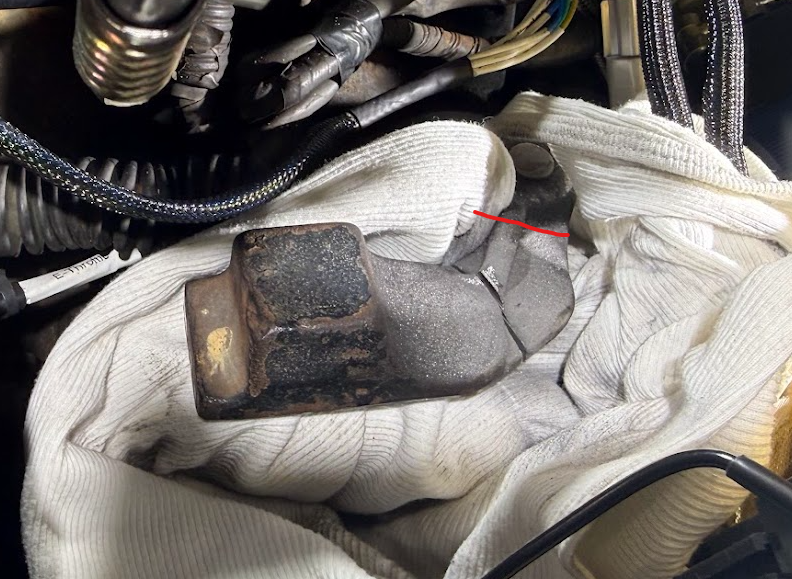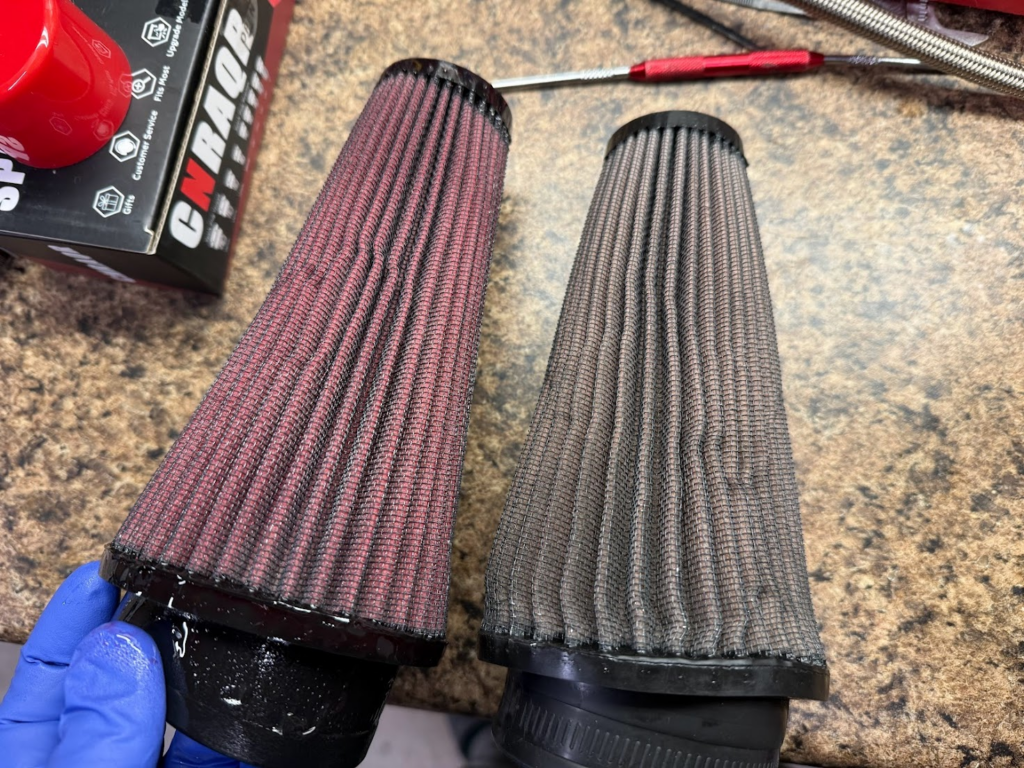
Originally, the plan was to take the Stealth down for both the drive-by-wire (DBW) and coil-on-plug (CoP) installations at the same time, but as I was doing it, I realized there wasn’t much duplicate work and that it would be better to tackle one system at a time if any problems arose.
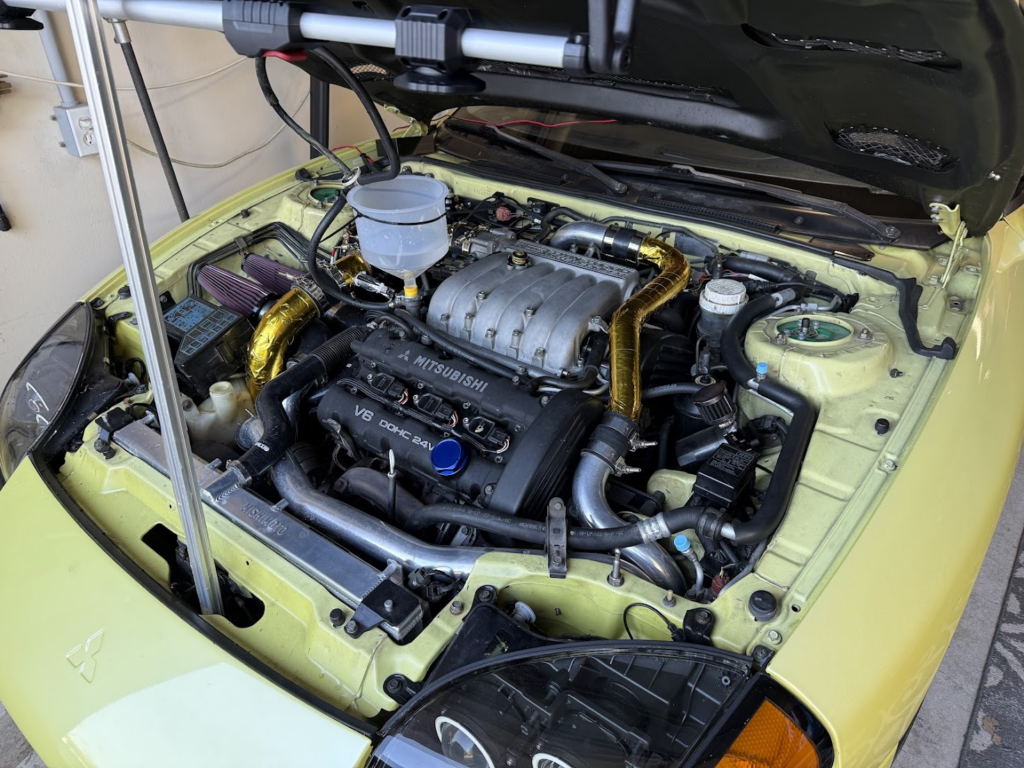
Well I wasn’t exactly planning on doing the CoP so quickly after the DBW, but while driving the other day I noticed coolant leaking from the thermostat housing… and of course it was probably the hardest hose to get off…
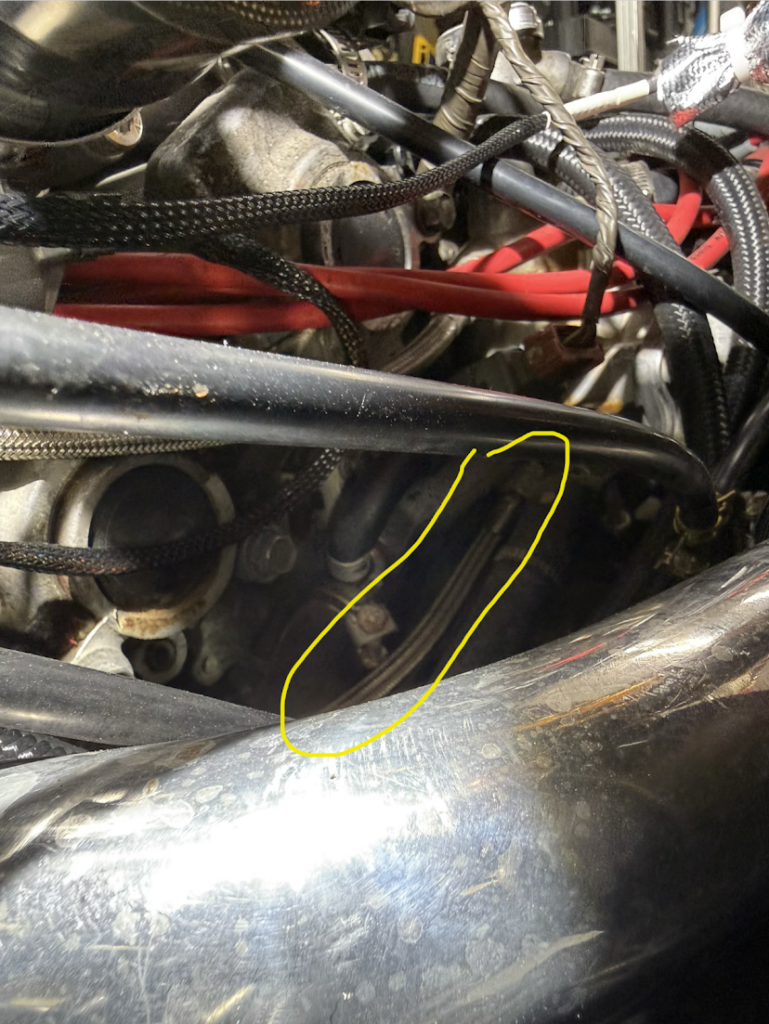
So to get that off I had to remove generally everything I needed if I was going to install the CoP, so I figured “while I’m down there” (the curse of all project cars)…
Rear Turbo Coolant Line Replacement:
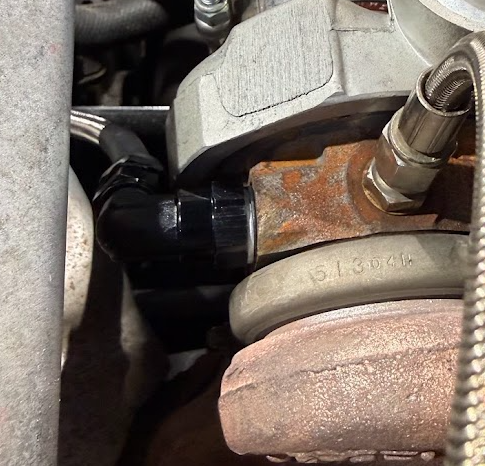
Up to this point all the “an lines” I’ve made have been nylon braided ones and never a “PTFE” one. Had to do a little research on this, but really it’s pretty easy to do thanks to YouTube. Although the super thick wire cutters I used for the Nylon one was no match for this. So I had to resort to regular cut off wheels. I also didn’t see any reason to stick with a Banjo bolt. I talked to a few colleagues and none of us could come up with a reason we want to restrict flow. Per AI, a regular right angle connector would flow about 60% more coolant than the banjo bolt and since this is just cooling a turbo that gets notoriously hot, I figured that was a good thing.
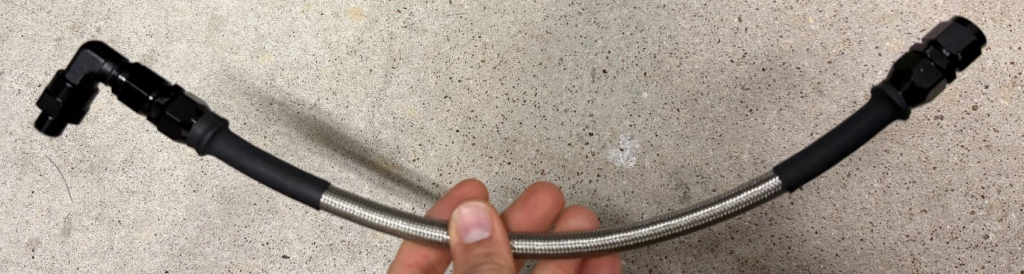
Installation of this went fairly easy. There were cheaper options available if I wanted, but now I have extra PTFE tube, extra connectors and everything. I thought about replacing the rear one as well but ultimately decided I wasn’t going to. I seriously have my concerns about the M12x1.25 right angle connector not leaking, but so far so good.
CoP Installation
Half the problem with the CoP installation was the fact I bought the kit used. In retrospect the amount of items missing and questions I had about it I would have been better off just buying a new one. There were bolts missing, spacers missing, no “cover” plate, etc. I also received “Hitatchi” CoP vs the Denso that R’Venge lists, but they appear to be the “Prius” ones also… so maybe just a swap? Who knows?
I determined the “spacers” were roughly 1/2″ OD x 1/4″ ID and 1″ in length. I bought these off Amazon and they appear to be a pretty good match. Was also missing the free bolts from it, they appear to be M8x1.25 and 45mm in length or so. I was able to re-use two of them, but they are barely getting any grip.
I followed the R’venge Installation Guide / FAQ and in general it was pretty accurate with few “gotchas”.
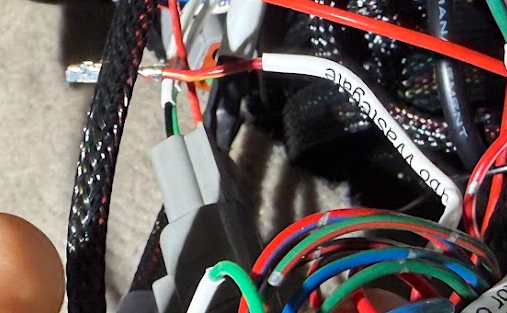
I also “hotwired” via relay the CoP so it got as much voltage as possible. I’m not the most happy with the engine bay wiring, but it wasn’t bad. Throughout this process there were a few times I was combining six wires into one (voltage, ground, and tach signal). What I think is the best method for this is the “Open Barrel Splice” and since I didn’t take any pictures of this, here is a great video from Motion Raceworks that shows how to do this.
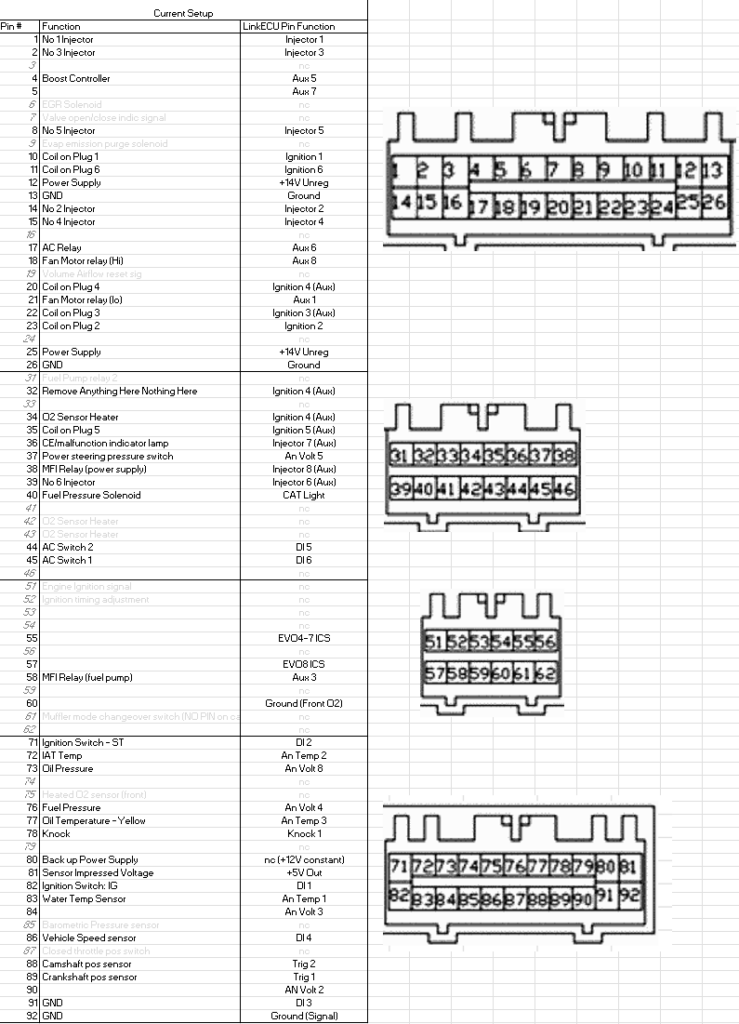
The other thing I did in this installation was run all the Ignition wires directly to the ECU instead of through the factor PTU wires for three of them. I just felt like giving it a new direct wire could save me headaches later and since I was already going down that path it was best to just go ahead and do this. I tied them directly to the LinkECU Pin Function that was for that item, so Cylinder 1’s CoP went to Ignition 1, 2 to 2, etc. I am not sure in the LinkECU if you can change this outside of changing the firing order, but I figured this was the best case to just keep them tied to the right cylinder. If you go this route you’ll need new pins. I think I only needed the “smaller pins” but if you are ordering from Digikey you might as well grab some of the larger ones as the injectors are all the larger ones…
Small ECU Pins: TE 175265-1 (Most of the ECU Pins)
Larger ECU Pins: TE 175269-1 (ECU Pins 1, 2, 3, 12, 13, 14, 15, 16, 25, 26 )
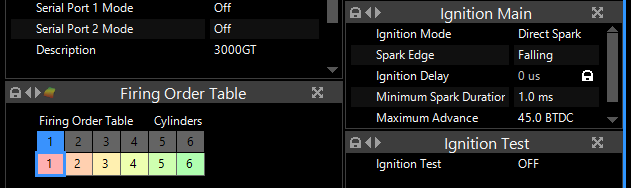
R’Venge provides some starting Dwell times, went off “Prius” ignition dwell times I found online, but I’m not publishing it as I don’t know if it’s accurate or not.
Bonus Round – “While I’m down there”